31-day returns policy Free delivery & returns More than 100,000 unique rugs Since 1998: Your expert in hand-knotted oriental rugs

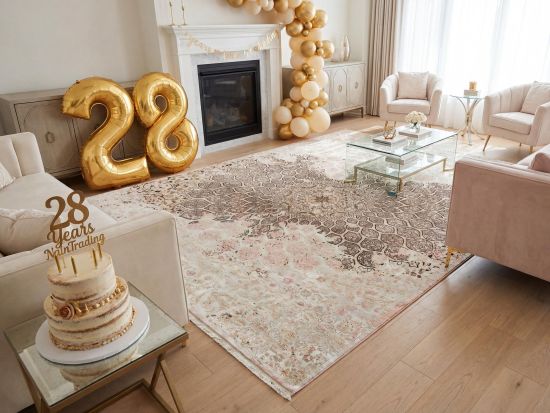
28 Years of Nain Trading – Extra 20% Off
Celebrate 28 years of Nain Trading with us and enjoy an extra 20% off our entire range – including rugs already on sale.
Discount code: 28YEARS

Nain Trading

Oriental Rugs – A Journey Through History, Culture and Craftsmanship

BY LAURA, RUG EXPERT AT NAIN TRADING | PUBLISHED: 2026-07-21 | 8 MIN READ

The history of oriental rugs does not begin in the living room

Today, oriental rugs are regarded as timeless home accessories and high-quality works of art. However, their history began long before they became a staple of stylish interiors. The first rugs were not made as decoration, but served a practical purpose: they protected people from cold, damp and uneven ground. Nomadic peoples in Central Asia in particular used the wool of their sheep to make durable and easily transportable rugs that accompanied them on their journeys.

Over time, this simple craft developed into a tradition spanning thousands of years. Different regions created their own knotting techniques, patterns and colour palettes, many of which have been preserved to this day. Many designs tell stories about their origin, nature, faith or everyday life, making every hand-knotted rug an expression of its culture.

In this article, we take a look at the origins of oriental rugs, their development over many centuries and the cultural influences that continue to shape their diversity today. At the same time, we show why hand-knotted oriental rugs are still among the most durable and fascinating home accessories in the world.

How it all began: The first oriental rugs

The history of oriental rugs goes back several thousand years. Long before rugs were appreciated as works of art or interior furnishings, they served people as practical everyday items. Nomadic peoples in Central Asia in particular developed techniques for making durable, warming rugs from the wool of their sheep. They provided protection from the cold, insulated the floors of their tents and could easily be rolled up and transported during their journeys.

Over time, knotting techniques became increasingly refined. What originally arose from a practical need developed into a sophisticated craft. Each generation passed on its knowledge and created patterns, colours and designs that often reflected nature, daily life or regional traditions. This is how the first distinctive oriental rugs came into being, and their variety has been preserved to this day.

As early as antiquity, hand-knotted rugs were traded along important trade routes. As a result, different knotting techniques and design elements spread across large parts of Asia and the Middle East. Over the centuries, each region developed its own style, giving rise to the wide variety of oriental rugs we know today.

The Silk Road and the Spread of Oriental Rugs

With the expansion of the historic trade routes, oriental rugs spread far beyond their regions of origin. They travelled in particular along the Silk Road from Central Asia to Persia, Anatolia, the Caucasus and later as far as Europe. Merchants transported not only rugs, but also new knotting techniques, patterns and dyeing methods, which influenced one another and continued to evolve.

Hand-knotted Persian rug is knotted by hand on the loom

Each region developed its own distinctive style. While Persian workshops became known for their intricate floral ornaments, more geometric patterns evolved in Anatolia and the Caucasus. These regional differences still shape oriental rugs today and often make their origin recognisable at first glance.

By the Middle Ages at the latest, hand-knotted oriental rugs were regarded in Europe as valuable trade goods. They adorned palaces, churches and the homes of wealthy merchants, becoming a symbol of quality, craftsmanship and cultural exchange.

How different cultures developed their own rug styles

Although oriental rugs share common roots, each region developed its own style over the centuries. Climate, available materials, cultural influences and craft traditions led to clear differences in colours, patterns and knotting techniques. That is why every oriental rug not only tells a story, but often also reveals its origin.

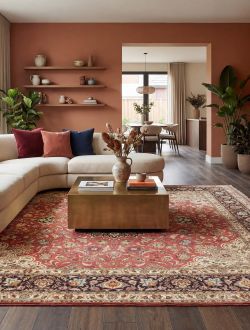
Hand-knotted Nain Persian rug in the living room with wooden table

Persian rugs

Persian rugs are among the best-known Oriental rugs worldwide. They are distinguished by their fine knotting, harmonious colour combinations and intricate floral patterns. Famous places of origin such as Nain rugs, Isfahan rugs, Tabriz rugs or Kashan rugs are still synonymous with the highest level of craftsmanship today.

Hand-knotted Kilim from Anatolia in the dining room with wooden furniture

Anatolian rugs

In present-day Turkey, rugs were created with bold colours and striking geometric ornaments. Many patterns have been passed down through generations and reflect regional traditions. Kilim rugs in particular are known for their flat-woven structure and versatile uses.

Hand-knotted Ziegler rug from Afghanistan in a modern living room

Rugs from Afghanistan and Pakistan

Afghan and Pakistani rugs combine traditional knotting craftsmanship with robust virgin wool and natural shades. Characteristic features include rich red tones, geometric patterns and durable quality. Afghan rugs and Ziegler rugs in particular remain highly popular to this day.

Hand-knotted Kazak rug from the Caucasus in a modern living room

Caucasian Rugs

Rugs from the Caucasus are best known for their striking geometric motifs and contrasting colours. Many designs were developed by tribal communities and remain highly distinctive to this day. One well-known example is Kazak rugs, which combine traditional patterns with particularly vibrant colours.

The Meaning of Patterns and Symbols

The patterns of an oriental rug are not just decorative. Many motifs have been passed down through generations and originally had a symbolic meaning. Depending on the region, era and ethnic group, the same ornaments could tell different stories or express particular wishes and values. Today, many of these meanings can no longer be clearly identified, yet they still offer a fascinating insight into the cultural diversity of oriental rugs.

Hand-knotted Gabbeh rug with Tree of Life motif in the children's bedroom

The Tree of Life

The tree of life is one of the best-known symbols in rug art. It often represents growth, hope and the connection between earth and heaven. This motif is found in numerous variations, particularly in Persian rugs.

Hand-knotted Qom silk rug with floral design

Flowers and Plants

Floral patterns are found mainly in classic Persian rugs. They symbolise the beauty of nature and give the rug a harmonious and elegant appearance. Depending on the region, flowers, vines or palmettes are interpreted differently.

Hand-knotted Kilim rug with geometric ornaments

Geometric Ornaments

Many nomadic and Caucasian rugs do without floral elements and instead feature geometric shapes. Diamonds, stars and octagons define their appearance and create a striking, timeless look.

Hand-knotted Nain Persian rug with classic medallion

Medallions

A central medallion is typical of many classic oriental rugs. It forms the focal point of the design and gives the rug a balanced, symmetrical appearance. Rugs from Nain, Isfahan or Tabriz in particular are known for this style.

How a hand-knotted oriental rug is made

The making of a hand-knotted oriental rug requires experience, precision and a great deal of patience. Depending on the size, material and knot density, production can take several months or even more than a year. Even today, many high-quality oriental rugs are made using traditional methods that have been passed down through generations.

1. Selecting the materials

It all starts with the right materials. High-quality virgin wool is usually used for the pile yarn, while particularly fine rugs may also contain silk. Cotton is often used for the foundation, as it provides stability.

2. Dyeing the wool

Before knotting begins, the wool is dyed. Traditionally, natural dyes made from plants, roots or minerals were used. Today, depending on the type of rug, both natural and modern dyeing methods are used to achieve long-lasting and even colours.

3. The knotting process

Each individual knot is then tied by hand around the warp threads. The patterns and colours follow a set design or, particularly in the case of nomadic rugs, are sometimes created from memory. The knot density affects both the level of detail and the time required for production.

4. Finishing and quality control

After knotting, the rug is washed, dried and sheared to the desired pile height. This is followed by the final inspection, as well as the finishing of the edges and fringes. Only then is a hand-knotted oriental rug ready for use in the home.

Why Oriental rugs are still valued today

Whether your interior is furnished in a classic or modern style, oriental rugs still hold a firm place in interior design today. Their combination of traditional craftsmanship, high-quality materials and timeless design makes them durable home accessories that are often used for generations.

As every hand-knotted rug is created through many stages of craftsmanship, no two pieces are exactly alike. Variations in colour tones, patterns or knotting give each rug its own individual character and make it truly one of a kind.

Oriental rugs can also be used in a wide variety of ways in modern interior schemes. While classic patterns add elegant accents, simpler designs such as Gabbeh, Berber or Ziegler rugs create a calm and contemporary atmosphere. In this way, Oriental rugs combine thousands of years of tradition with the demands of modern living spaces.

Hand-knotted Nain rug in a modern living room with a green medallion

Find the right rug:

Choosing an oriental rug is like a little journey: you are looking for the perfect mix of style, space and personal taste:

  • Personal style: Colour, pattern and design should suit your home. Simple styles such as Kilim or Ziegler create a harmonious look in modern rooms, while detailed Kashan, Isfahan or Nain rugs convey classic elegance.
  • Size: A rug should fill the room – not too small, but not overwhelming either. Runners or round rugs can be used to create stylish accents.
  • Shape and placement: Square, rectangular or runner – the shape influences the overall impression.
  • Combining several rugs: Make sure the colours and patterns work well together.
  • Care: Regular vacuuming, airing and occasional repairs will help your rug last for many years.

Quality recognition:

How can you actually recognise a high-quality oriental rug? The key factors are material, knot density, precision and craftsmanship:

  • Materials: Wool is durable, silk is luxurious, and wool-silk blends combine elegance with everyday practicality.
  • Retailer: Reputable specialist retailers guarantee origin, authenticity and quality, often with a certificate confirming the handmade production.
  • Age and condition: Knot count, colour depth, material quality and care history reveal authenticity and value.

An oriental rug is far more than just a decorative piece. With proper care, it can become a valuable family heirloom and be passed down through generations.

Frequently Asked Questions about Oriental Rugs

What is meant by an oriental rug?

Oriental rugs are rugs traditionally made in countries across the Middle East, Central Asia and the Caucasus. They are distinguished by their craftsmanship, characteristic patterns and regional features.

Why do oriental rugs vary by region?

Each region developed its own knotting techniques, colour palettes and patterns over the centuries. Climate, available materials and cultural traditions have significantly shaped the appearance of each type of rug.

Are oriental rugs still hand-knotted today?

Yes. Many high-quality oriental rugs are still entirely hand-knotted today. Depending on the size and knot density, production can take several months or even more than a year.

What materials are used for Oriental rugs?

Traditionally, oriental rugs are made from virgin wool, cotton or silk. The combination of materials influences, among other things, the feel, durability and sheen of the rug.

Do Oriental rugs also suit modern interiors?

Yes. In addition to classic designs, there are many modern oriental rugs with minimalist patterns or subtle colours. This means they can be combined with both minimalist and classic interior styles.

Why are hand-knotted oriental rugs considered particularly durable?

Thanks to the intricate hand-knotting, high-quality natural materials and careful craftsmanship, hand-knotted oriental rugs can last for many decades with proper care.

Further inspiration

Close-up of a hand-knotted oriental carpet with a traditional pattern in red, blue and cream.

Genuine Persian carpets are a good investment.

Persian Rugs: 11 Significant Provenances

Persian Rugs: 11 Significant Provenances

Woven oriental Kilim rugs with traditional patterns

Woven and hand-knotted rugs