31-day returns policy Free delivery & returns More than 100,000 unique rugs Since 1998: Your expert in hand-knotted oriental rugs

28 Years of Nain Trading – Extra 20% Off
Celebrate 28 years of Nain Trading with us and enjoy an extra 20% off our entire range – including rugs already on sale.
Discount code: 28YEARS

Nain Trading

The history of the hand-knotted rug: 2,500 years of craftsmanship

BY REZA, RUG EXPERT AT NAIN TRADING | PUBLISHED: 2026-06-11 | 5 MIN READ
Hardly any furnishing item has such a long history as the hand-knotted rug. What adorns living spaces today once warmed nomads’ tents, decorated Persian palaces and was regarded in Europe as a status symbol that people did not even dare to walk on. The most remarkable thing about it: the knotting technique has hardly changed in around two and a half millennia. A brief journey through the history of a unique craft.
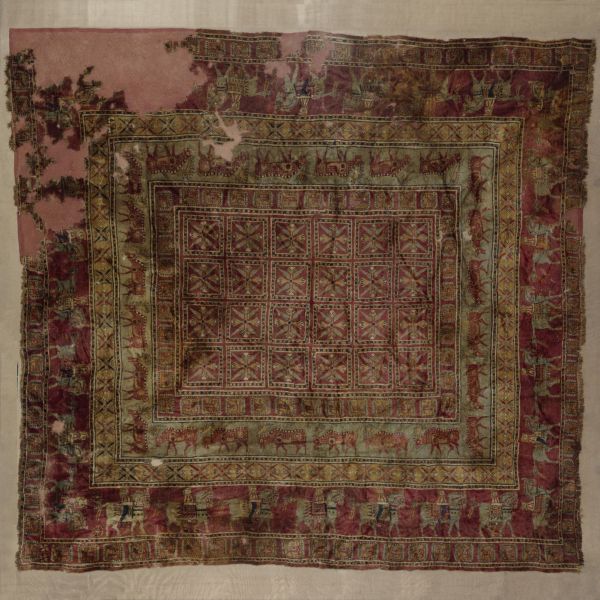
Pazyryk rug, one of the oldest known knotted rugs with geometric and animal motifs.

The Pazyryk Rug: a 2,500-year-old masterpiece

How old the art of knotting really is, no one knows for certain. The only thing that is certain is when the oldest surviving example was made: the so-called Pazyryk carpet dates back to the 5th to 4th century BC. The Russian archaeologist Sergei Rudenko discovered it in 1949 in the burial mound of a Scythian prince in the Altai Mountains – preserved in permafrost, which protected the delicate textile from decay for thousands of years. Today, the carpet can be seen in the Hermitage in St Petersburg. What is remarkable is not only its age, but above all its quality: with around 360,000 knots per square metre and finely crafted motifs of horsemen, deer and griffins, it bears witness to an already highly developed craftsmanship. Researchers therefore conclude that the origins of carpet knotting must go back much further. Exactly where the technique originated remains unclear to this day – much points to the nomadic peoples of Central Asia.
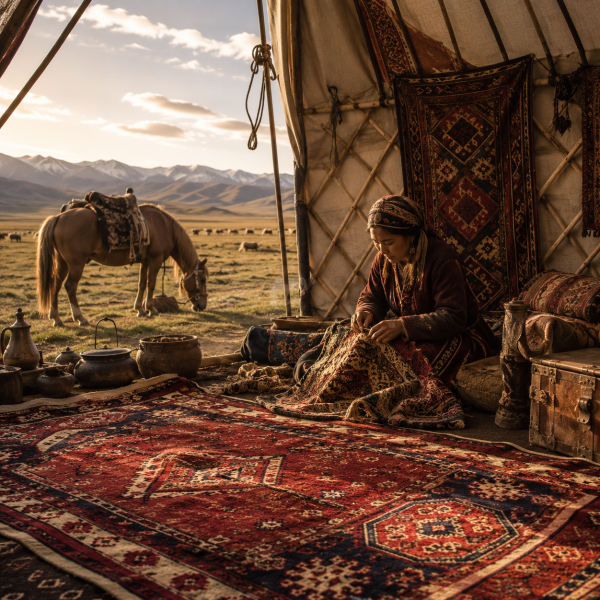
In a nomadic tent, a woman is hand-weaving a rug, and on the floor lies a red,

From the nomads' tent...

For the nomads of the Central Asian steppes, the rug was initially not a luxury but a necessity: it insulated the tent floor against the cold and served as a sleeping mat, saddlebag and wall hanging. It was woven from materials provided by their own herds – above all sheep’s wool, dyed with plants and minerals from the surrounding area.
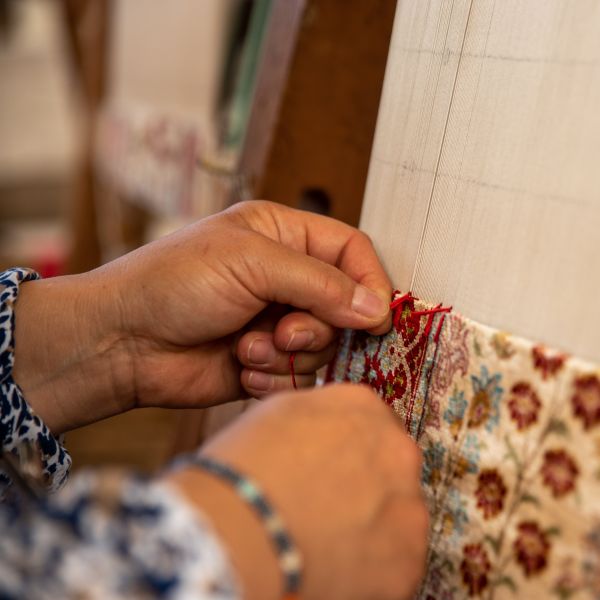
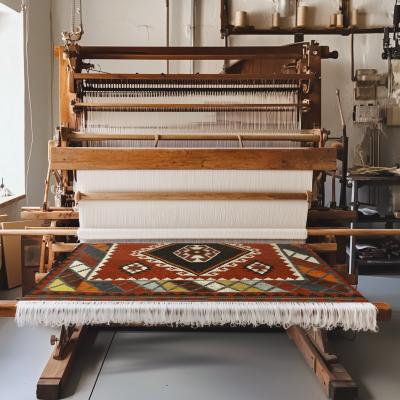
Hand-knotting a rug on a loom, showing a traditional rug-making technique

...to the court manufactory

As early as ancient times, two knotting techniques emerged that are still used today: the symmetrical knot, also known as the Turkish or Gördes knot, and the asymmetrical Persian or Senneh knot, which allows particularly intricate patterns. With the migration of the Seljuks, the art of carpet weaving reached Anatolia from the 11th century onwards; some of the oldest Anatolian carpet fragments have been preserved from 13th-century Konya. Along the trade routes of the Silk Road, carpets – and the knowledge of how to make them – spread far beyond their regions of origin.
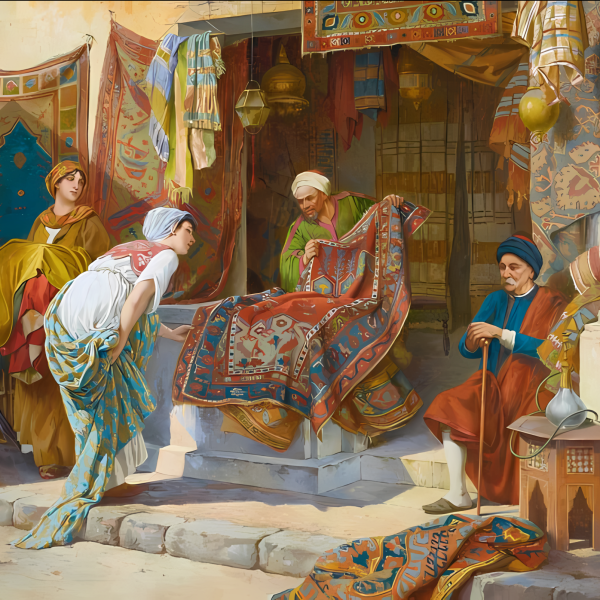
Historic painting of a woman choosing a rug in an ancient marketplace and

The golden age under the Safavids

The art of rug weaving reached its artistic peak in Safavid Persia (1501–1736). The rulers elevated the rug from a handcrafted product to a form of court art: in workshops in cities such as Isfahan, Kashan and Tabriz, weavers worked from designs by court painters, using the finest wool and silk, often interwoven with gold and silver threads. Rugs became diplomatic gifts and highly sought-after export goods. One of the world’s most famous rugs dates from this period: the Ardabil rug, dated to 1539/40 and now displayed in the Victoria and Albert Museum in London. Its central medallion and balanced composition continue to shape the design of classic Persian rugs to this day.

The rug conquers Europe

Oriental rugs reached Europe mainly via the trade routes of Venice – and they were so valuable that hardly anyone placed them on the floor. In Renaissance paintings, they appear as table coverings, wall hangings or beneath the feet of saints and rulers. Painters such as Hans Holbein the Younger and Lorenzo Lotto depicted Anatolian rugs so frequently that entire pattern groups are now named after them. In the 19th century, the rug changed from a rare luxury item into a sought-after furnishing for the European middle classes. Demand led to the rise of export-oriented production in Persia, Anatolia and India – with both benefits and drawbacks: alongside high-quality workshops, mass-produced goods also emerged, and the new synthetic dyes brought the first quality issues, making knowledge of traditional natural dyes all the more valuable.
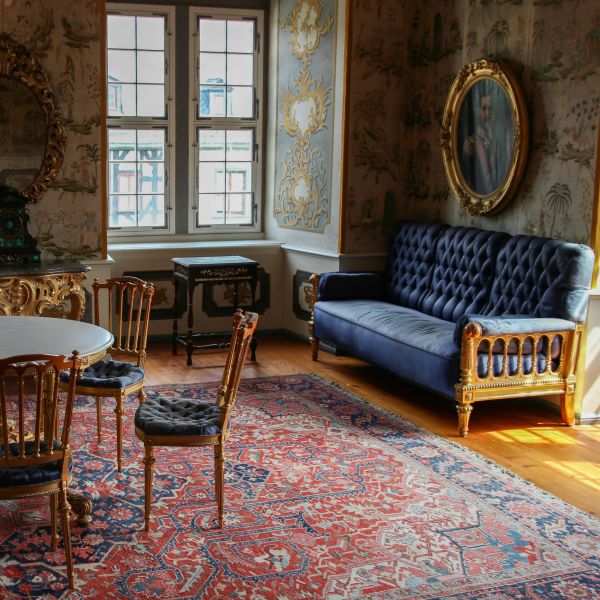
Hand-knotted red rug in a Baroque interior.

Hand-knotting craftsmanship today: a living tradition

What is remarkable about this long history is that a hand-knotted rug is still made today in essentially the same way as it was 2,500 years ago – knot by knot, by hand, often over many months of work. In Iran, Afghanistan, Pakistan, India and Turkey, the art of rug knotting is passed down from generation to generation, and in many places it remains an important source of income for entire regions. Especially in an age of industrial mass production, this craft is enjoying renewed appreciation: a hand-knotted rug is durable, repairable and made from renewable materials – making it one of the most sustainable home accessories of all. Every piece is unique and bears the signature of the person who knotted it. Anyone who buys a hand-knotted rug today, for example from the Nain Trading range, brings a piece of this millennia-old history into their own home – while also helping to ensure that its story continues.
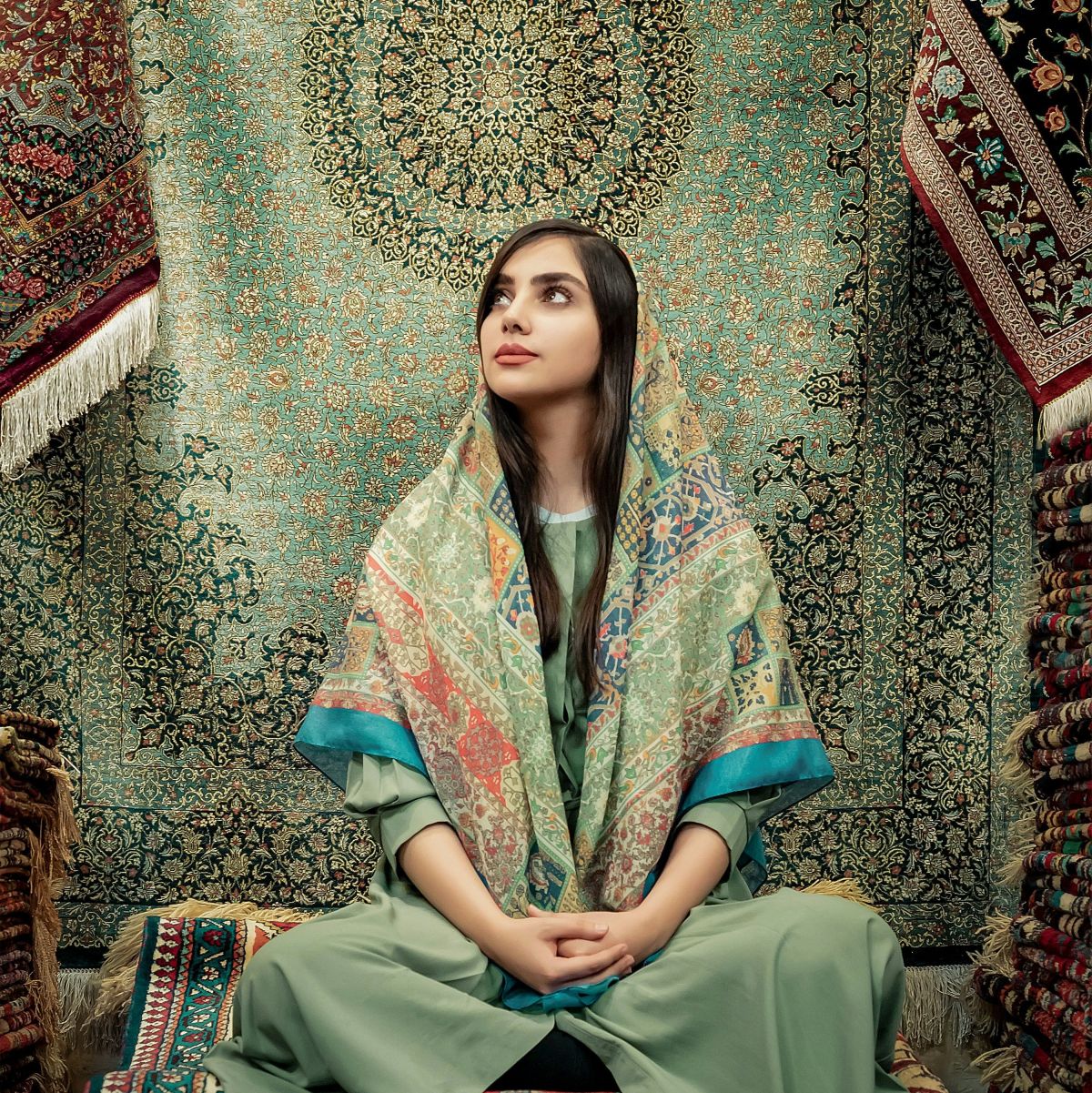
Woman in a green outfit sitting in a rug market in front of a green patterned rug.

Further inspiration

Elegant living room in classic style with dark oriental carpet

Classic Living

Hand processing of virgin wool as a sustainable basis for rugs in the Nature Living style

Nature Living

Nomadic carpets from Persia with traditional patterns and natural colours
An overview of the most significant provenances

Nomadic rugs from Persia