31-day returns policy Free delivery & returns More than 100,000 unique rugs Since 1998: Your expert in hand-knotted oriental rugs

28 Years of Nain Trading – Extra 20% Off
Celebrate 28 years of Nain Trading with us and enjoy an extra 20% off our entire range – including rugs already on sale.
Discount code: 28YEARS

Nain Trading

Industrial Loft Style

BY LAURA, RUG EXPERT AT NAIN TRADING | PUBLISHED: 2026-07-08 | 7 MIN READ

The industrial loft style is the epitome of an interior design look where freedom and character matter most. Exposed brick, concrete, metal and visible pipework create a unique urban atmosphere.

The industrial loft style emerged in mid-20th-century New York, when former factories and warehouses were converted into living spaces. The first residents of these lofts were artists, architects and creatives.

Today, the loft look is popular worldwide and firmly established in the world of interiors. The loft style is a play on contrasts: between cool and cosy. Rugs play a key role here. The right rug brings warmth, texture and personality to the rustic loft style, transforming an industrial space into a real home.

The industrial style: raw, urban and distinctive

What makes industrial style so distinctive is its honesty. Instead of smooth perfection, materials with history dominate: weathered wood, raw metal, concrete floors and brick walls. Furniture is often substantial, with a patina or vintage look, while accessories are made from stainless steel or black iron.

The style calls for clarity in design – but that does not mean sacrificing comfort. Quite the opposite: rugs are the element that creates atmosphere without changing the character of the room. They are not just an addition, but often a deliberate eye-catcher, a centrepiece with personality.

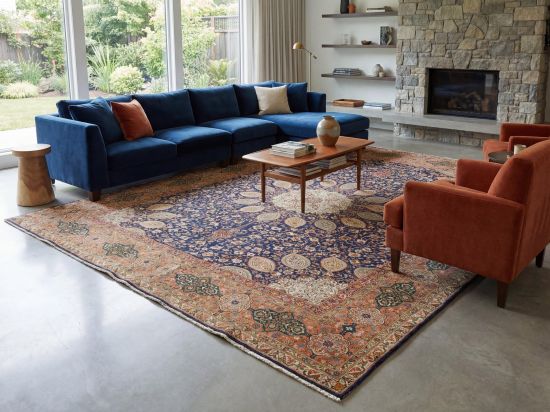
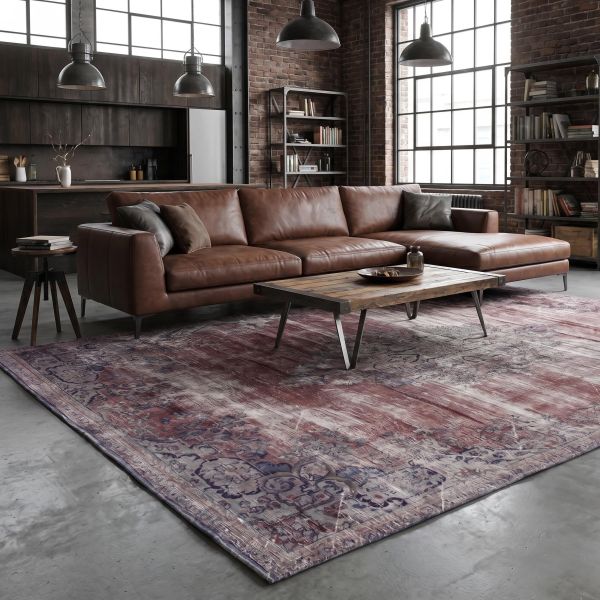
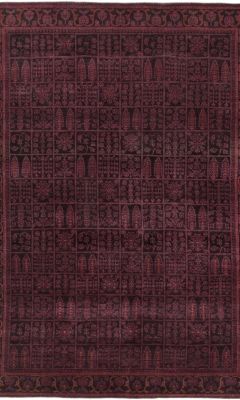
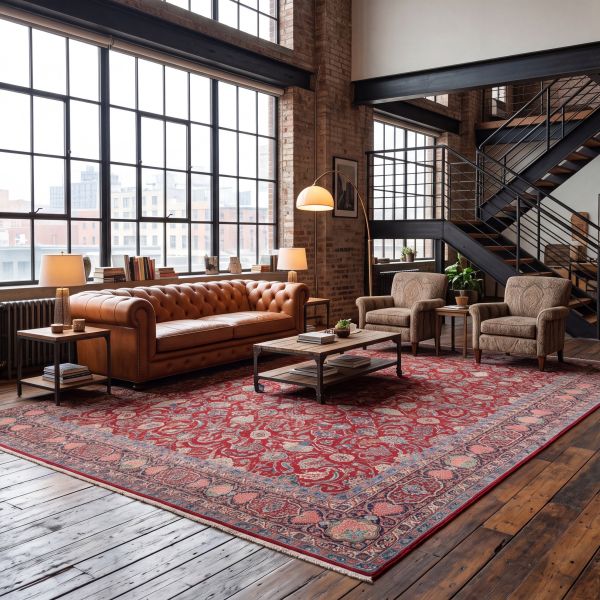
Whether it is a deep red Sarouk that harmonises with brick, or a faded Persian rug as a striking accent on a grey floor: rugs fit seamlessly into industrial design or act deliberately as a stylish contrast. Especially in open-plan layouts such as lofts, they create clear zones and visually anchor furniture groups.

How to achieve the industrial style

Anyone looking to create a convincing industrial style should opt for a well-balanced mix of raw materials, clean lines and carefully placed contrasts. These tips will help you showcase the industrial living look to perfection:

  • Choice of materials: Unplastered walls, exposed brick, concrete, metal and natural wood create the typical foundation. Features such as visible pipes, cables or steel beams can deliberately remain on show – they are part of the look.
  • Colour palette: Neutral, muted shades such as grey, black, brown, anthracite or rust create a calm atmosphere. Dark green or deep blue accents add extra depth to the room.
  • Furniture: Vintage-style furniture made from reclaimed wood, leather or metal enhances the urban feel. Signs of wear and patina are very much encouraged.
  • Room layout: The loft character thrives on open-plan layouts. Clear separation between the kitchen, dining and living areas is avoided, creating a sense of spaciousness and seamless transitions.
  • Lighting: Industrial metal lamps, ideally with visible bulbs or a cage design, are defining style elements. Large floor lamps or pendant lights create striking focal points.

Myths surrounding the industrial style – What’s really true

Industrial style is more popular than ever, but with its growing popularity, a few persistent myths have also taken hold. Time to question some of them:

  • Myth 1: Industrial style is always cold and uncomfortable.

  • Yes, concrete, metal and brick can feel cool at first glance – but that is exactly what the industrial look is about: creating contrast. With warm materials, rugs, lighting and textiles, rawness is transformed into an atmosphere that is deliberately pared-back yet still inviting.

  • Myth 2: The style only works in large lofts.

  • Originally developed in old warehouses, the industrial look can now also be achieved in smaller flats. With carefully chosen materials, colours and furniture, you can create that loft feeling even in a period property or a new-build – without an exposed brick wall or five-metre-high ceilings.

  • Myth 3: Everything has to be old or second-hand.

  • Vintage is one element of the style, but it is not a rule. New industrial-style furniture can also fit perfectly, as long as it is simple, functional and honest in its use of materials. It is the mix that matters: old and new can sit side by side quite naturally in industrial style.

  • Myth 4: The look is only for men.

  • Industrial style is often seen as “masculine” – because of dark colours, metal and clean lines. But that idea is long outdated. Combined with warm textiles, fine rugs, plants or art, the style becomes gender-neutral – and gains depth.

  • Myth 5: A room has to be furnished entirely in industrial style.

  • The style has the strongest effect when it is not overdone. Combining industrial elements with other styles – such as boho, Scandi or classic interiors – can make a space even more interesting. The industrial look is more versatile than many people think.

Rugs for Industrial Chic Colour, Pattern and Material

The dominant tones in industrial style are generally dark and understated. But a rug can break the mould and deliberately add a fresh accent to the room:

  • Muted earthy tones such as beige, taupe, rust red, ochre or umber harmonise perfectly with brick and wood.
  • Shades such as anthracite, ink blue or emerald green emphasise the cool character of metal accessories.
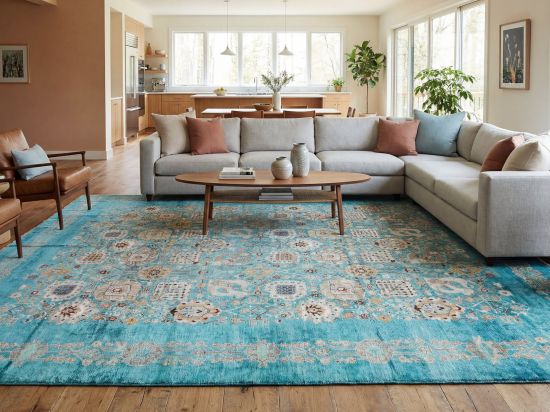
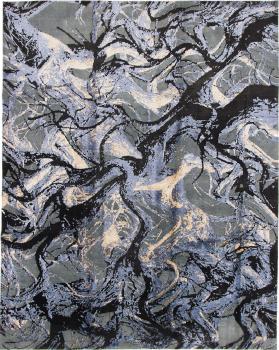
  • Overdyed rugs in vibrant colours create striking contrasts and look particularly exceptional in darker rooms.
  • Warm shades of red, blue, brown and gold give classic Oriental rugs their impact – ideal for industrial spaces with depth.

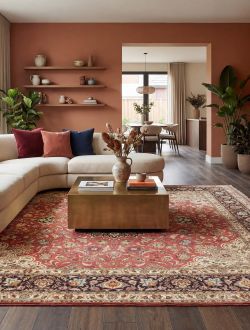
Style tip: An overdyed Persian rug in Bordeaux red or petrol blue has its full effect on stone or wooden floors, complemented by a leather sofa and a black metal shelving unit.

Category Typical features Effect in the room
Colours Anthracite, black, grey, brown, rust shades, beige and dark wood tones. Creates an urban, timeless atmosphere with strong character.
Patterns Simple designs, vintage look, subtle geometric patterns or gently faded textures. Adds structure without disrupting the minimalist character of industrial style.
Materials Wool, leather, cotton, metal, solid wood, concrete and glass. Combines natural warmth with the distinctive look of industrial materials.

Which rugs are particularly well suited to the industrial style?

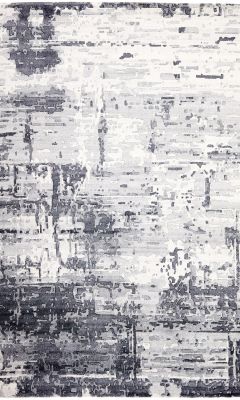
Sadraa Rugs

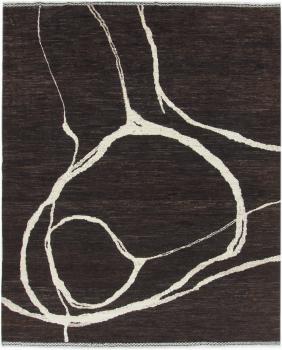
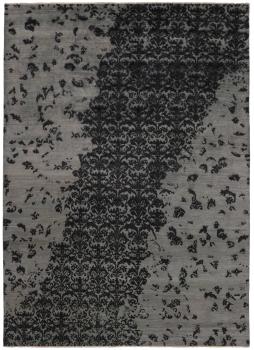
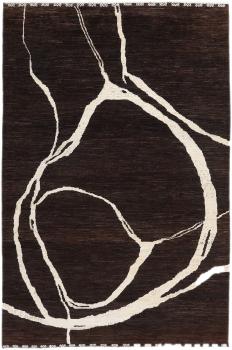
With abstract or traditional motifs in understated colours, Sadraa rugs complement the industrial look in a subtle way. They look particularly harmonious when combined with concrete, steel and wood – for example in a bedroom with a metal bed and simple wooden furniture.

View the Sadraa rugs

Mila Rugs

With modern, minimalist patterns, Mila rugs have a clean and understated look. Perfect for interiors that focus on order, elegance and simplicity.

View the Mila collection

Gabbeh Rugs

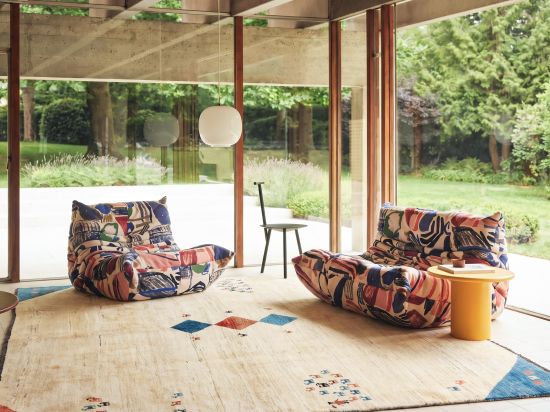
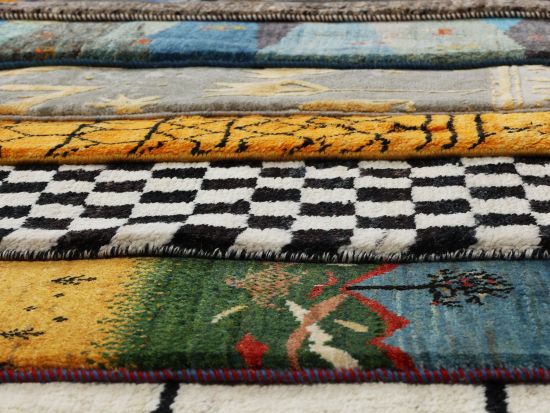
These rugs embody rustic simplicity. They work beautifully in rooms with an industrial character and bring a pleasant warmth to the space.

Discover Gabbeh rugs

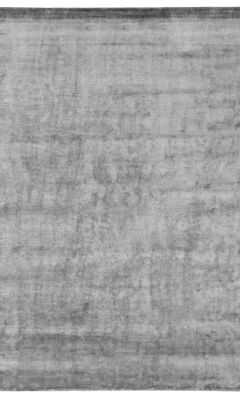
Essence Rugs

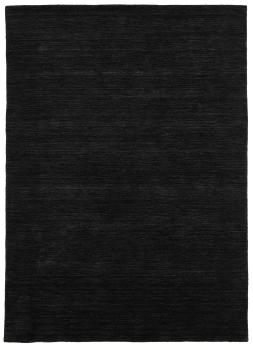
These designs are defined by their subtle restraint. They add softness to a space shaped by hard materials without disrupting the industrial style.

Discover Essence rugs

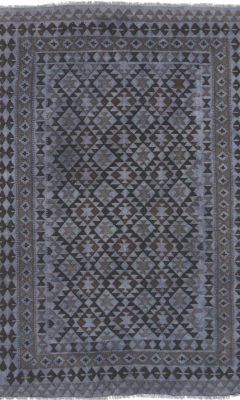
Kilim Rugs

If you want to give your loft a livelier, ethnically inspired feel, a Kilim is the perfect choice. The bold colours and graphic patterns make a deliberate statement.

Discover Kilim rugs

Hand-knotted or hand-woven?

Both options work well – depending on what you prefer:

Hand-knotted rugs are often more detailed, denser and more durable. Perfect if you are looking for a real statement piece that can stand up to the raw industrial look.

Hand-woven rugs feel lighter and more modern. They are ideal if you want to soften the industrial style a little without losing the character of the room.

Natural materials in the industrial loft – quality you can see and feel

In industrial loft style, it is not only the design that plays a central role, but also the quality of the materials. Rugs made from natural fibres not only look stylish, but also contribute to a healthy indoor climate. At Nain Trading, the focus is therefore on handmade rugs crafted from high-quality natural materials – durable, traditional and authentic.

Wool (sheep’s wool and virgin wool): Hard-wearing, soft, dirt-repellent and ideal for high-traffic areas.

Wool-silk blend: Combines durability with a refined sheen – an elegant combination for modern spaces.

Pure silk: Perfect for luxurious accents in minimalist interiors – subtle yet striking.

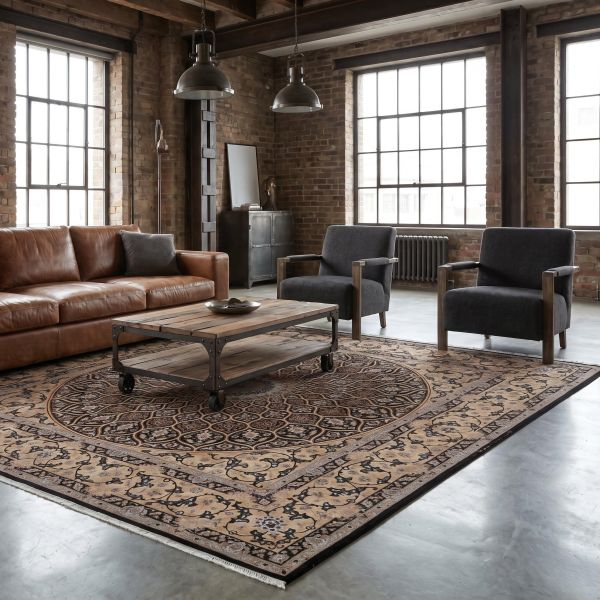
Style tip: A classic Persian rug made from pure virgin wool creates an exciting contrast with cool materials such as concrete or metal, bringing a pleasantly warm feel to the room.

Room by Room: How to Combine Rugs in Industrial Style Properly

Living Room – Structuring Open Space in Style

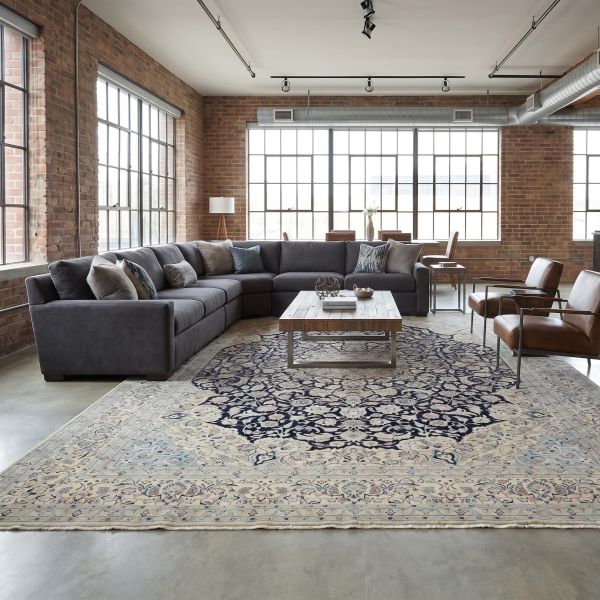
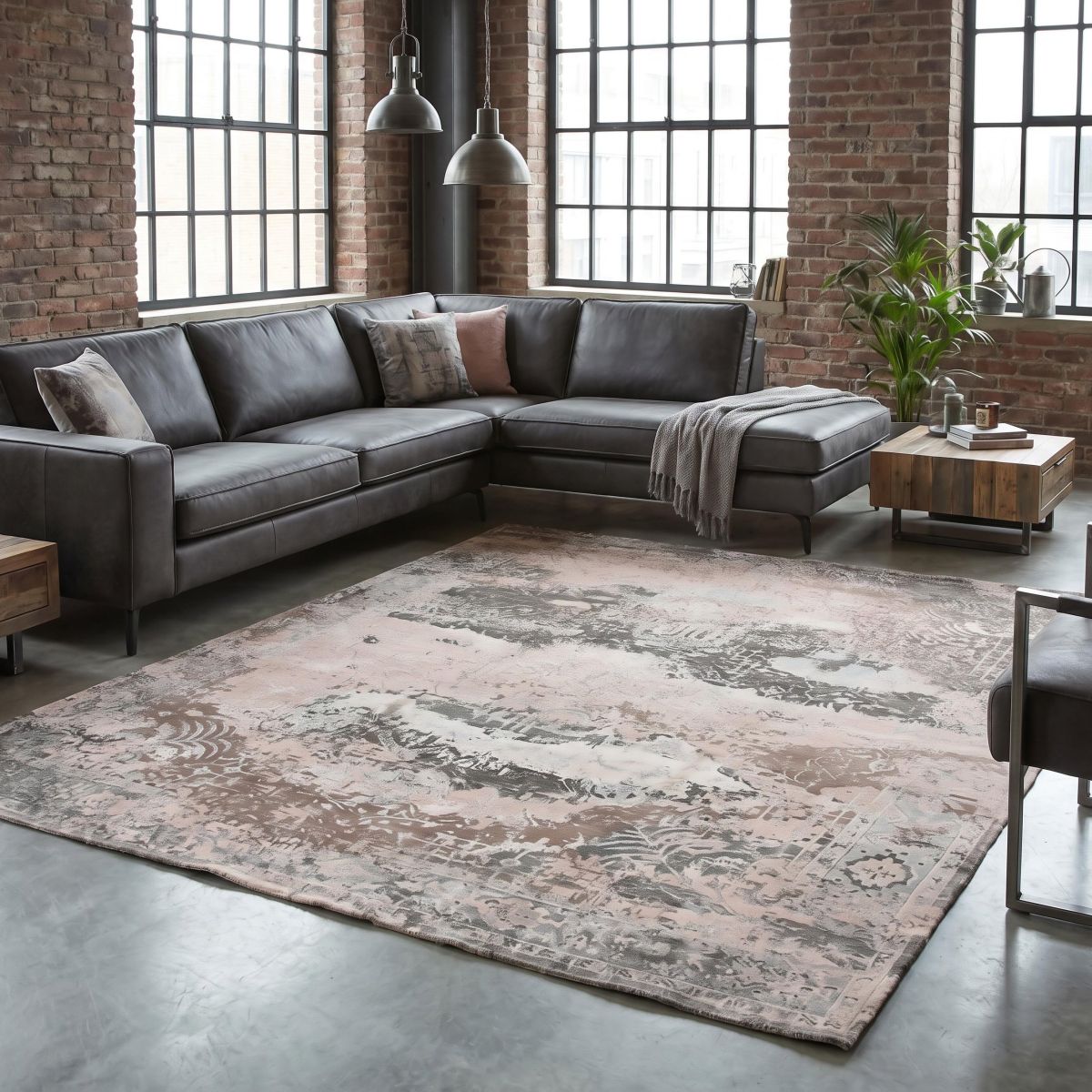
Especially in large, open-plan living areas, a generously sized rug is essential. It visually anchors sofa arrangements, softens the room acoustics and brings a sense of cosiness to high loft ceilings.

Size recommendation: 300 x 200 cm to 400 x 300 cm – depending on the size of the sofa group.

Dining Room – A Functional Textile Foundation

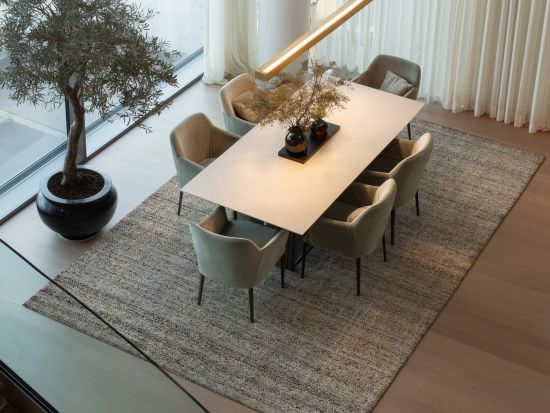
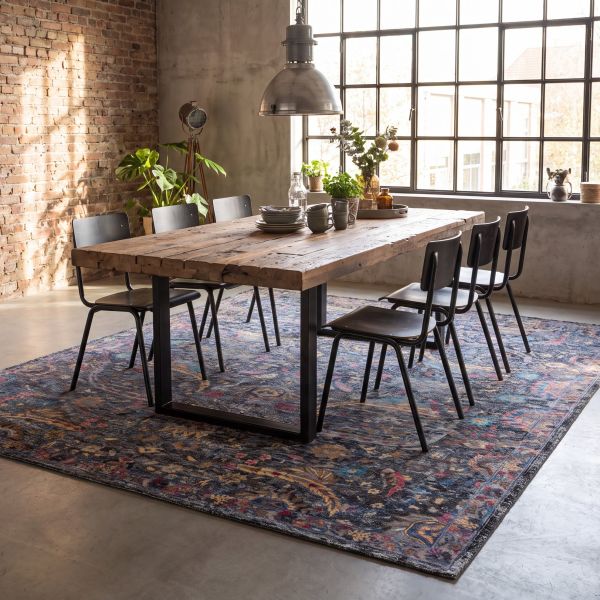
A rug under the dining table not only creates visual harmony but also adds a warm atmosphere. Important: it should be large enough for chairs to remain comfortably on it even when pulled out.

Size recommendation: For four chairs, 300 x 200 cm; for six to eight chairs, 350 x 250 cm or larger.

Hallway – show off length, enhance impact

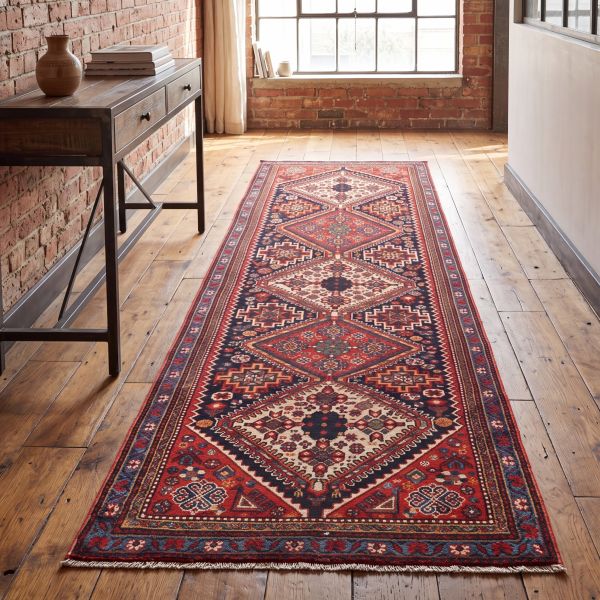
Long, narrow hallways benefit particularly from a well-chosen runner. It visually elongates the space and creates a warm, welcoming atmosphere.

Size recommendation: 80 x 300 cm to 100 x 400 cm – depending on the length and width of the hallway.

Loft spaces – create zones with rugs

In open-plan layouts, rugs are the perfect way to define zones. Several coordinated rugs create clarity and order within the room.

Size recommendation: 400 x 300 cm or 500 x 400 cm in the living area, 350 x 250 cm in the dining area.

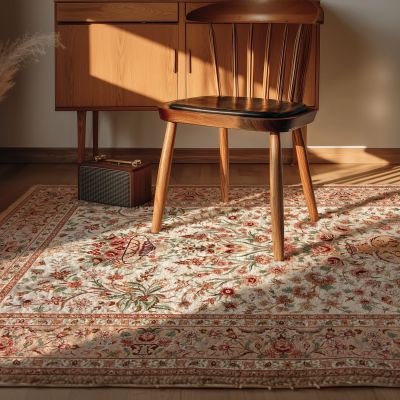
Style tip: A large Kashan rug in cream with floral details brings harmony to spacious rooms with concrete floors and large windows.

Home Office – Structure and Calm for the Workspace

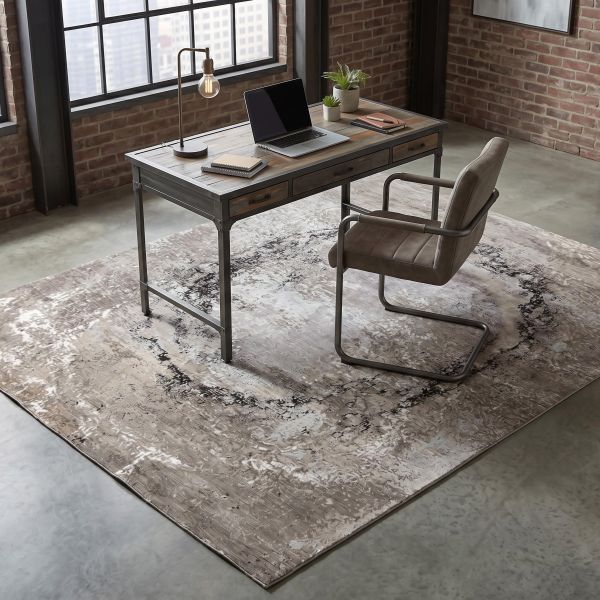
A rug can not only visually define the home office, but also improve its acoustics. Especially in open-plan living spaces, it helps create a focused work area.

Bedroom – Textile comfort for gentle transitions

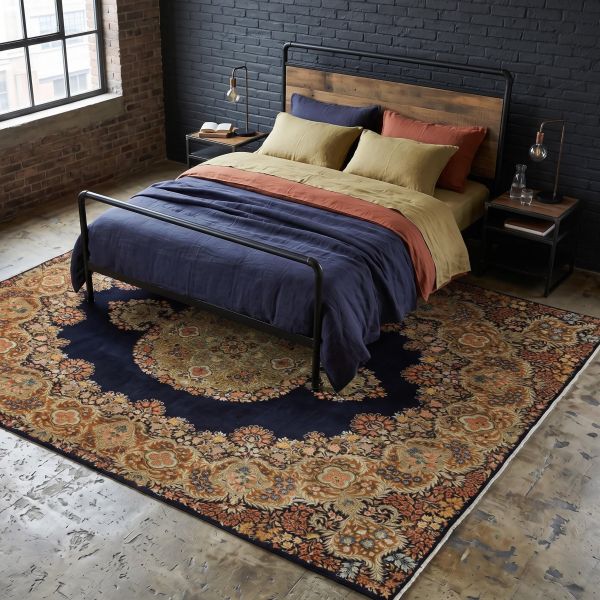
In the bedroom, rugs create a comfortable step when getting up and a calm atmosphere. Whether used as a bedside rug, runner or large base rug, the placement depends on the room layout.

Popular: A bedside rug (150 x 100 cm) or a runner (200 x 80 cm) next to the bed, combined with a medium-sized rug in front of the wardrobe. For freestanding beds, a rug that extends at least 60–80 cm beyond the bed is recommended – around 350 x 250 cm.
Frequently asked questions about the industrial style

Which rug texture suits the industrial style best?

Rugs with a natural texture or a subtle vintage look are particularly well suited. They complement materials such as concrete, steel and wood without overloading the pared-back character of the industrial style.

Can an industrial living room still feel cosy?

Yes. The key is the balance between raw materials and homely elements. A high-quality rug, warm lighting and natural textiles make the room feel cosier without changing the style.

Should the rug in industrial style stand out or have a subtle look?

Both are possible. A rug in understated colours blends harmoniously into the room, while a design with character can be used deliberately as a focal point. The important thing is that the colours and materials work well together.

How do you care for a rug in an industrial interior style?

Regular vacuuming and quick stain removal are usually sufficient for everyday care. Hand-knotted rugs also benefit from professional cleaning at longer intervals to preserve their colours and fibres over time.

What role does a rug play in industrial style?

A rug structures the room, improves the acoustics and creates a pleasant contrast with hard surfaces such as concrete or metal. This makes the interior feel more balanced and at the same time more homely.

Rugs in Industrial Loft Style at Nain Trading

A loft with raw concrete walls, dark metal and solid wooden furniture needs a rug. Whether it is to add a subtle warmth to the room and enhance the ambience, or to create a striking contrast.

The enormous variety of modern and traditional handmade Oriental rugs makes them the ideal accessory for the industrial style. Whether for the living room, dining room or a spacious loft – at Nain Trading you will find the rug that takes your industrial style interior to the next level.

Further inspiration

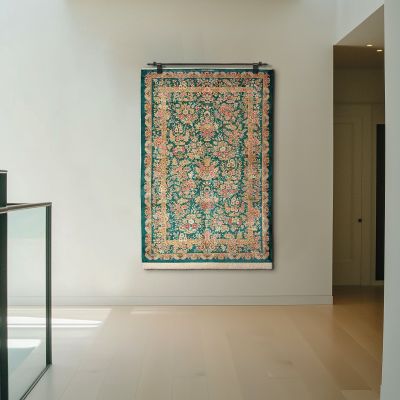
Oriental rug in traditional medallion design as wall decoration

Back in fashion: Oriental carpets on the wall

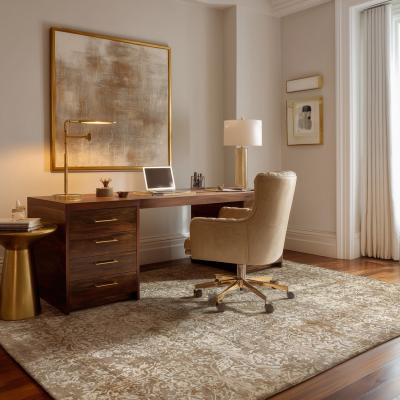
Modern office with a large hand-knotted Oriental rug
Elegance and comfort in the workplace

Which carpet is suitable for an office?