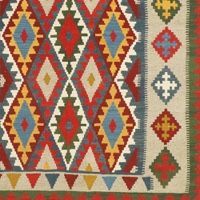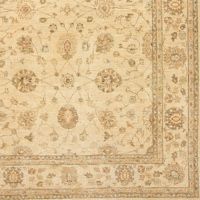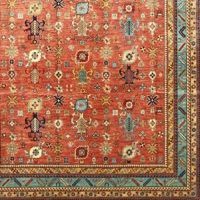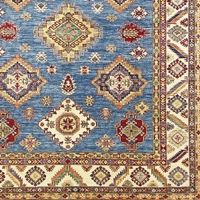
31-day returns policy Free delivery & returns More than 100,000 unique rugs Since 1998: Your expert in hand-knotted oriental rugs

28 Years of Nain Trading – Extra 20% Off
Celebrate 28 years of Nain Trading with us and enjoy an extra 20% off our entire range – including rugs already on sale.
Discount code: 28YEARS

Nain Trading

Pakistan Rug or Afghan Rug? Differences, Features & Buying Guide

BY REZA, RUG EXPERT AT NAIN TRADING | PUBLISHED: 2026-07-08 | 9 MIN READ
Hand-knotted Pakistan rugs and Afghan rugs are among the most popular oriental rugs of all. Both stand out for their high-quality virgin wool, traditional craftsmanship and exceptional durability. At first glance, they often look similar, but they differ significantly in their origin, patterns, colours and character. But which rug is a better match for your interior style? In this guide, you will discover the key differences between Pakistan rugs and Afghan rugs, which materials are used, what to look out for when buying, and which rug is best suited to your home.

What is a Pakistan rug?

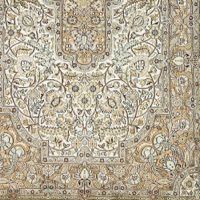
Pakistan rugs have been handcrafted for decades in traditional weaving workshops in Pakistan. Many designs are inspired by classic Oriental rugs, but over time they have evolved into a distinctive style of their own. Their defining features are fine knotting, harmonious colours and elegant patterns. High-quality hand-spun virgin wool is predominantly used in their production. This creates rugs that are pleasantly soft, highly durable and, with proper care, retain their beauty for many years. Typical Pakistan rugs feature subtle shades such as beige, gold, brown or burgundy, along with symmetrical ornaments and fine borders. Thanks to their understated appearance, they can be incorporated into both classic and modern living spaces, adding stylish accents without dominating the room.

What is an Afghan rug?

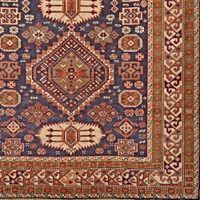
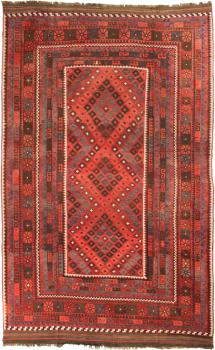
Afghan rugs come from Afghanistan and have been traditionally hand-knotted for generations by skilled weavers. Many patterns are rooted in the country’s culture and tribal traditions, giving each rug an authentic character. Like Pakistan rugs, Afghan rugs are made predominantly from high-quality virgin wool. Their robust craftsmanship and natural materials make them particularly durable and hard-wearing – even in heavily used living areas. Typical features include rich red tones, warm shades of brown and geometric patterns, especially the well-known Göl motifs. This gives Afghan rugs a distinctive look and brings a warm, traditional atmosphere to living spaces. They are an excellent match for Boho, country house or industrial-style interiors, but also create a striking contrast in modern rooms.

Pakistan Rug vs. Afghan Rug

Although Pakistani rugs and Afghan rugs have many similarities, they differ in several important characteristics. The following overview will help you find the right rug for your interior style and personal preferences.

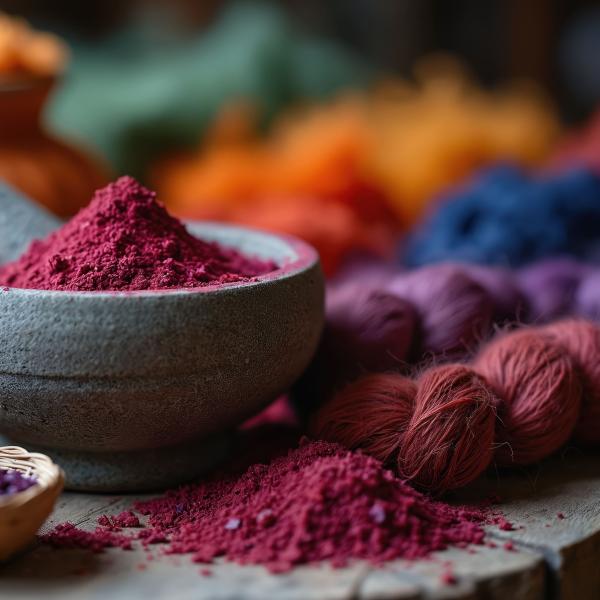
Natural dyes in Afghan and Pakistani carpets

Feature Pakistani rug Afghan rug
Origin Pakistan Afghanistan
Production Hand-knotted Hand-knotted
Material High-quality virgin wool High-quality virgin wool
Pattern Delicate ornaments, fine borders Geometric tribal patterns, Göl motifs
Colours Beige, gold, brown, burgundy Dark red, brown, black, rust tones
Effect Elegant and harmonious Expressive and traditional
Interior style Modern, classic, timeless Boho, country house, industrial, ethnic
Durability Very high Very high
Both types of rug represent genuine craftsmanship and impress with their durability. While Pakistani rugs captivate with their fine, elegant appearance, Afghan rugs are distinguished by bold colours and striking patterns. Which option is right for you depends mainly on your personal taste and the interior style you want to create.

What materials are Pakistan and Afghan rugs made from?

The quality of a hand-knotted rug depends not only on the knotting technique, but also on the materials used. Both Pakistani rugs and Afghan rugs are traditionally made from natural materials, valued for their durability, comfort and timeless appearance.
Material Advantages
Hand-spun virgin wool Soft, hard-wearing, temperature-regulating and dirt-repellent
Cotton Provides stability and helps the rug retain its shape as warp and weft
Natural vegetable dyes Give the rug harmonious, long-lasting shades with a natural look
Natural silk (in selected models) Adds elegant lustre and highlights fine details in the pattern
The combination of high-quality virgin wool, a durable cotton foundation and traditional dyeing methods ensures that both types of rug retain their beauty even after many years. With the right care, hand-knotted Pakistani and Afghan rugs can bring joy for generations.

Typical Colours and Their Meaning

The colours of a Pakistani or Afghan rug are far more than a design element. Traditionally, they were created using natural vegetable dyes, giving each rug its distinctive character. Depending on the choice of colour, a different effect is created in the room.
Colour Meaning & Effect
Red Represents warmth, energy and traditional craftsmanship.
Beige Creates a calm, timeless look and can be combined in many ways.
Brown Conveys naturalness, comfort and a grounded feel.
Gold Adds elegance and highlights high-quality patterns.
Dark Blue Brings depth, calm and a stylish contrast.
Black Emphasises contours and gives the ornaments greater expression.
Colour collage with rugs in red, beige, brown, gold, dark blue and black.

Typical patterns of Pakistani and Afghan rugs

The patterns of a hand-knotted rug often tell a story and reflect the traditions of their region of origin. Although Pakistani rugs and Afghan rugs share many similarities, they differ significantly in their design.
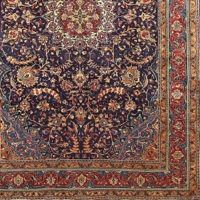
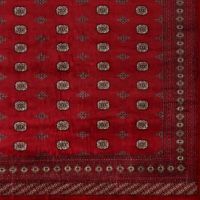
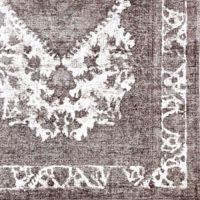
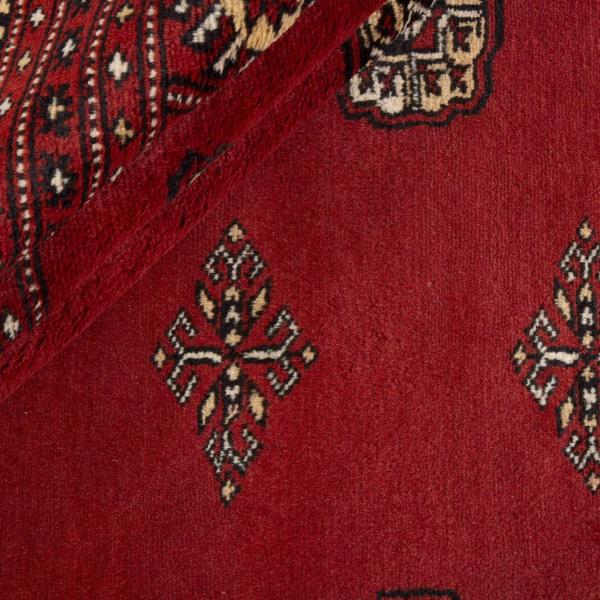
Detailed close-up of a Pakistani rug showing its beautiful traditional patterns

Pakistan Rugs

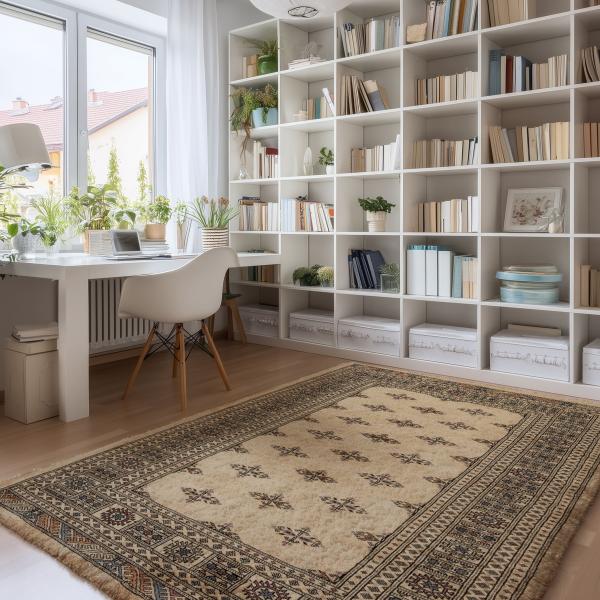
Pakistan rugs are characterised by an elegant and balanced appearance. They are often designed with intricate borders, symmetrical ornaments and the well-known Bokhara pattern. The fine details and clean lines give them a timeless elegance that stands out beautifully in both classic and modern living spaces.
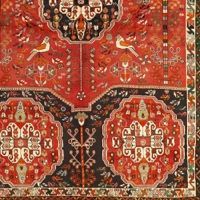
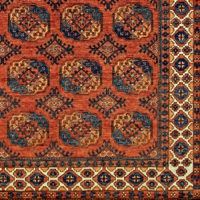
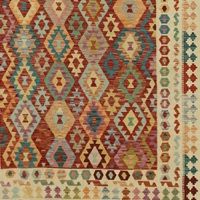
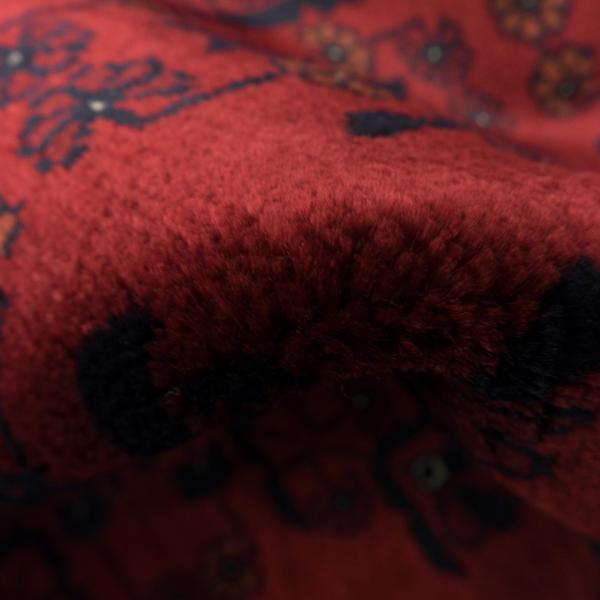
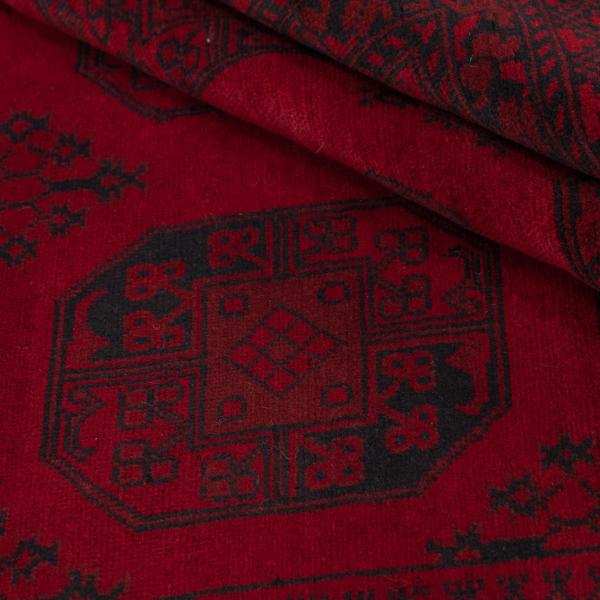
Detailed close-up of an Afghan rug showing its beautiful traditional patterns.

Afghan rugs

Afghan rugs have a more authentic and expressive look. Typical features include geometric tribal patterns, traditional gül motifs and bold shapes that have been passed down through generations. This gives each rug its own individual character and brings a piece of traditional craftsmanship into the home.
Whether filigree elegance or striking patterns – both types of rug impress with their hand-knotted quality and make every rug a truly one-of-a-kind piece.

Which rug suits which interior style?

Both Pakistani rugs and Afghan rugs can be combined in a variety of ways. Depending on their pattern, colour and overall look, however, they pair particularly well with certain interior styles.

Modern Living Room

A Pakistan rug with subtle colours and fine ornamentation complements modern interiors elegantly. It adds warmth without overshadowing the room’s clean character.

Classic Interior Design

In classic living spaces, Pakistan rugs with their harmonious patterns and traditional borders highlight the timeless elegance of the interior.

Boho and Ethnic Style

Afghan rugs go exceptionally well with natural materials, warm colours and individual interior styles. Their distinctive patterns create vibrant accents and give the room character.

Country house style

With their warm red and brown tones, Afghan rugs create a cosy atmosphere and pair particularly well with wooden furniture and natural fabrics.

Industrial Style

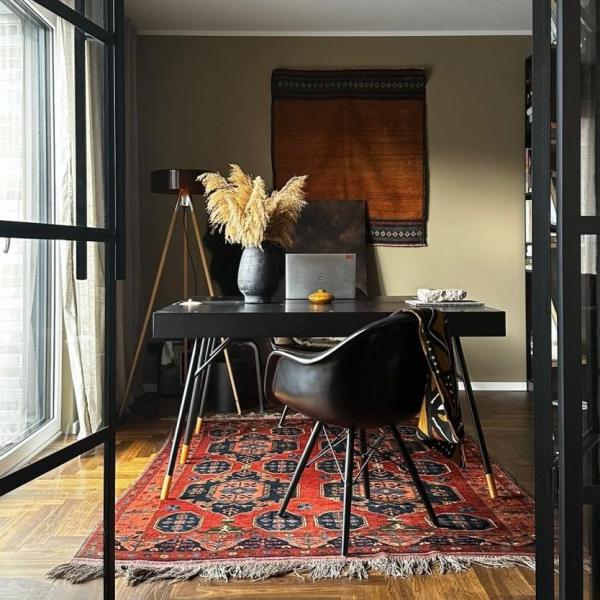
Even in modern lofts or industrial interiors, Afghan rugs create a striking contrast. The traditional patterns soften the minimalist look and bring warmth to rooms with concrete, metal or dark wood.

What should you look out for when buying a Pakistani or Afghan rug?

A high-quality hand-knotted rug will often stay with you for many decades. That is why it is worth paying attention to a few important quality features when buying.

  • Hand-knotted craftsmanship: Every knot is tied by hand, making each rug a truly unique one-off.
  • High-quality virgin wool: It provides a pleasant feel, excellent durability and a long lifespan.
  • Natural colours: Rugs dyed with plant-based colours develop an especially beautiful and vibrant patina over time.
  • Neat knotting: Even and precise workmanship is a sign of high quality.
  • The right size: The rug should suit the size of the room and the arrangement of the furniture to create a harmonious overall look.
  • Intended use: For heavily used areas such as the living room or hallway, particularly robust models made from hard-wearing virgin wool are ideal.

Anyone who pays attention to these features is investing in a rug that not only looks impressive, but also brings lasting enjoyment for many years.

Why are Pakistani and Afghan rugs so durable?

Pakistan and Afghan rugs have been handcrafted for generations using traditional knotting techniques. Every single knot contributes to the rug’s stability and makes it particularly resistant to everyday wear and tear. Another crucial factor is the use of high-quality virgin wool. The natural wool fibres are elastic, dirt-repellent and can spring back into shape after pressure. This means that hand-knotted rugs retain their shape and pleasant feel even after many years. With the right care, both types of rug can even develop additional character over time. The colours gain depth, while the robust craftsmanship ensures that a high-quality Pakistan or Afghan rug can often be used for generations.

Conclusion

Both Pakistani rugs and Afghan rugs stand for traditional craftsmanship, high-quality natural materials and impressive durability. Both are hand-knotted and bring a special atmosphere to any living space. If you are looking for an elegant rug with fine ornaments and a harmonious colour palette, a Pakistani rug is the ideal choice. If, on the other hand, you prefer bold colours, striking geometric patterns and an authentic, traditional character, an Afghan rug will suit your home perfectly. Ultimately, it comes down to your personal interior style and taste. With a hand-knotted Pakistani or Afghan rug, you are investing in a timeless one-off piece that can stay with you for many years.

Frequently Asked Questions about Pakistani and Afghan Rugs

Are Pakistani and Afghan rugs suitable for underfloor heating?

Yes, most hand-knotted Pakistani and Afghan rugs can be used on underfloor heating without any problems. Virgin wool retains heat well while also helping to create a pleasant indoor climate.

How do I recognise a hand-knotted rug?

On the back of a hand-knotted rug, the pattern is almost identical to the front. Small irregularities are not a sign of poor quality, but rather a mark of genuine craftsmanship.

Which rug size is suitable for the living room?

That depends on the size of the room and the arrangement of the furniture. In the living room, the rug should ideally visually tie the seating area together and provide enough coverage under the sofa or coffee table.

Do new wool rugs shed?

Yes, especially in the first few months, hand-knotted wool rugs may shed slightly. This is a natural process and will decrease significantly over time.

How do you clean a Pakistani or Afghan rug properly?

Regular vacuuming without a rotating brush is sufficient for normal care. Stains should be carefully removed as quickly as possible. For a thorough clean, professional carpet cleaning is recommended if needed.

Are Pakistani and Afghan rugs suitable for households with children or pets?

Yes. Thanks to their robust virgin wool, both types of rug are very hard-wearing and are also suitable for heavily used living areas. Regular care helps to preserve their beauty over the long term.

Do Pakistan and Afghan rugs become more valuable over time?

High-quality hand-knotted rugs can last for many decades with proper care. Particularly well-crafted pieces are often passed down through generations and retain both their material and sentimental value.

Why is every hand-knotted rug one of a kind?

As each rug is entirely hand-knotted, no two pieces are exactly alike. Small variations in pattern, colour or knotting highlight the individuality and distinctive character of each rug.

Further inspiration

Moderner minimalistischer Raum mit handgewebtem Teppich

Industrial Style

Traditional loom with blue handwoven carpet in progress

Warum ein handgeknüpfter Designteppich die richtige Wahl ist

Hand-knotted rug in a harmoniously styled dining room with natural colours
A simple guide to harmonious rooms and choosing the right rug colour

Choosing the Right Rug Colour